
Atoms, Not Code
What We Can Agree On

We all need to eat. We all need to work.
I used to believe no one could argue with food and jobs. I still believe that is mostly true…which is exactly why it matters that we keep telling this story clearly, calmly, and without apology.
Right now, this country is pouring extraordinary capital into AI…even as many remain unconvinced. We are betting billions on something we are still trying to understand. And here is what we do know: AI is energy-hungry. It is leaving the SaaS abstraction and demanding physical infrastructure: data centers, power, water, land. Atoms, not just code.
That shift demands a different kind of thinking. When you build with atoms, returns are not instant and planning cannot be short-term. The infrastructure we build today shapes what is possible for decades. We have to plan into that future, not just the next funding round.
At the same time, we remain deeply biased toward shareholder value. That instinct is not wrong…it is one of our strengths. The problem is that we have started confusing financial abstraction with durability. We invest in what scales fast, not always in what holds.
Other countries are building differently. China (gasp), for example, is investing heavily in infrastructure that is both profitable and existential: food systems, energy systems, manufacturing systems. Things made of atoms. Things that are hard to replicate. Things that keep showing up when conditions get hard.
Food is infrastructure.
As many of you know, I run Vertical Harvest, a controlled environment agriculture company. We grow fresh, nutritionally packed leafy greens and microgreens year-round in vertical farms…climate-controlled facilities that use a fraction of the water and land of conventional agriculture, with no pesticides and predictable output regardless of weather. We operate in Wyoming and Maine, and we intend to build more.
This is not experimental agriculture. This is production agriculture with modern tools.
We grow food where people live, close to where it will be consumed, with the kind of consistency that institutions, schools, and supply chains actually need.
What we have built cannot be quickly replicated. The systems, the teams, the operational knowledge, the community relationships…these take years to develop and refine. That defensibility creates real value for our stakeholders. It also creates value for the communities we serve.
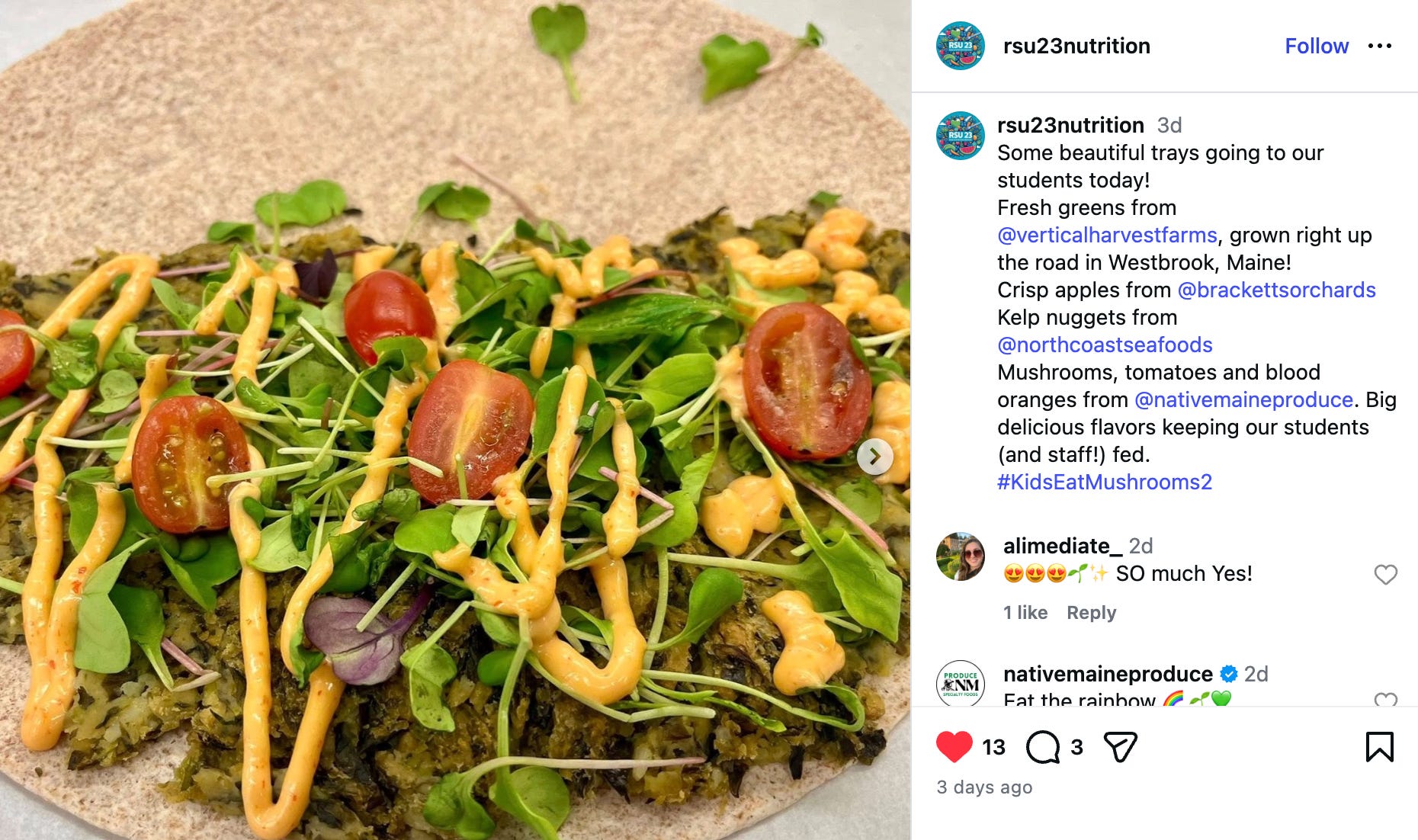
Last week, our team packaged greens for more than 25 Maine schools, starting with the Westbrook High School salad bar. That matters.
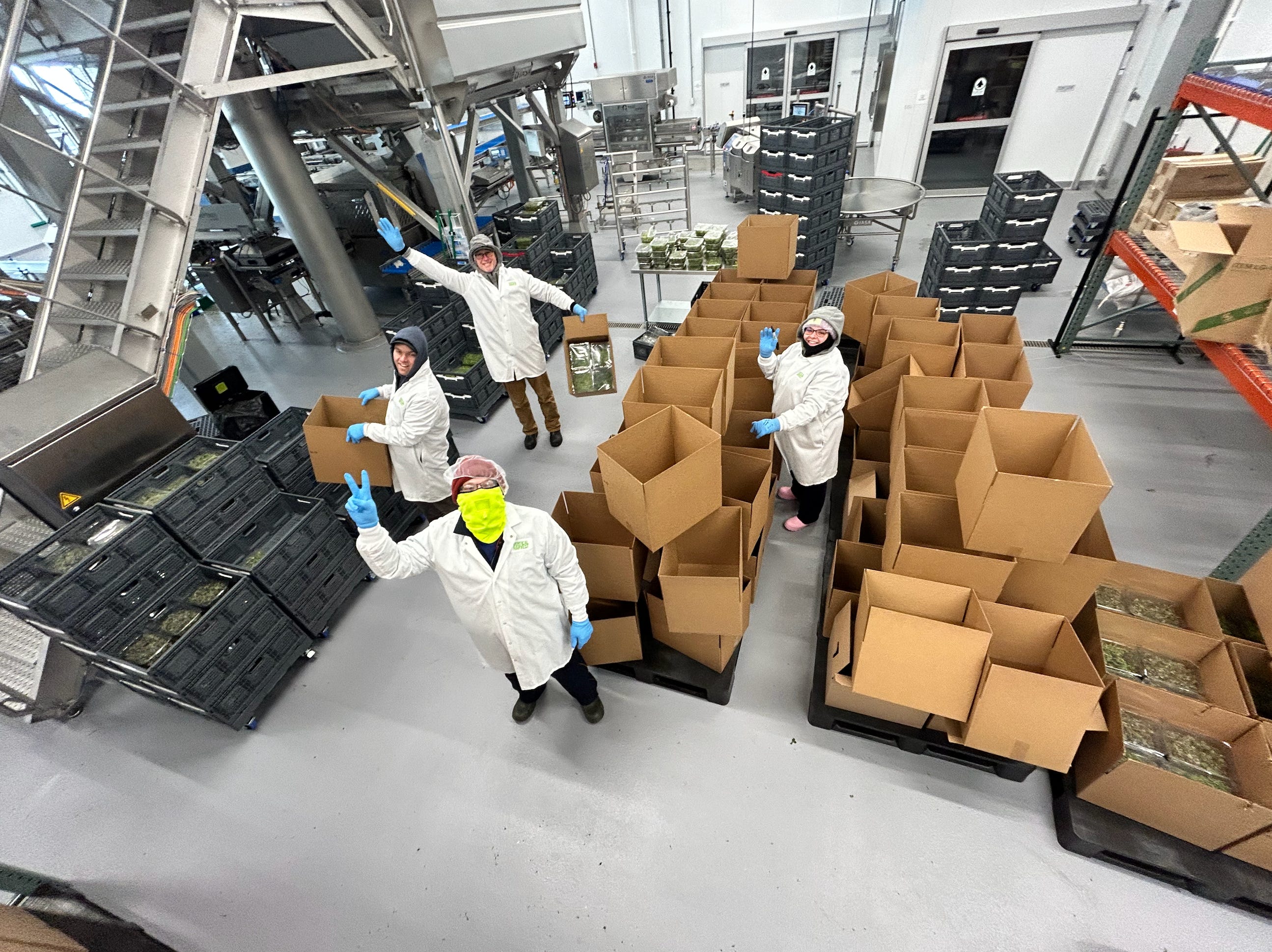
It matters because growing food in the heart of a community changes what is possible.
Schools can rely on fresh, local supply at scale. Hospitals and healthcare facilities can source consistently. Demand across the state can be met without shipping food thousands of miles. The people we serve are not abstract customers, but neighbors.
If we are serious about nutrition, for kids, for patients, for families, this is where it starts: with local production, with consistency, with dignity in what we serve.
And with stability.
Price stability does not start at the shelf. It starts long before food ever reaches a plate. It starts with where and how we grow it.
When food travels thousands of miles, prices are tethered to fuel costs, weather disruptions, labor shortages, supply chain bottlenecks, and global market swings. That instability shows up immediately in school nutrition budgets, healthcare food programs, and household grocery bills.
Local food production changes that equation.
When we grow food where it is consumed, supply chains shorten. Transportation exposure drops. Pricing becomes more predictable and more resilient. Producers and buyers can plan. Institutions can budget. Communities can rely.
This is why controlled environment agriculture matters as infrastructure, not as novelty. Innovation is essential, but it has to rest on strong fundamentals, not experiments divorced from market reality.
CEA is not about reinventing agriculture. It is about applying proven technology to solve a basic problem: how do we produce fresh, nutritious food reliably, year-round, close to population centers, with stable pricing and reduced environmental impact?
The answer is not sexy. It is engineering. It is operations. It is teams who understand both agriculture and industrial production. It is capital deployed into systems that generate revenue from day one, not five years from now.
This is what investing in infrastructure looks like.
Food production is infrastructure. Nutrition is infrastructure.
These systems support public health, workforce productivity, educational outcomes, and regional economic stability. They are not a social add-on. They are a foundation.
Our team at Vertical Harvest shows up every day to make this real…growing food, building careers, and proving that local production can operate at scale while delivering the stability the market is asking for.
Starting with our communities. Starting with price stability. Starting with the understanding that reliable access to fresh, nutritious food is foundational infrastructure.
And here is what makes this moment different: everyone is now worried about the same thing. Stability.
Agreement is possible.
This is not theoretical. I have told this story before, but it is worth telling again.
At the very beginning, I went head-to-head with a Tea Party leader who wanted to kill Vertical Harvest outright. Instead of fighting him in public, I took him to lunch. Every week. For more weeks than I care to count. Eventually, we agreed on something simple and powerful…it was a good idea.
A very conservative state used public funds to build community infrastructure. Not because it was fashionable, but because it worked. Ten years later, that decision is still feeding people, still creating jobs, still proving its worth.
That is where we are again.
This is a good idea. It brings people together. It makes money. It lasts. It delivers stability when everything else is volatile.
We need to invest in things we can build. Things we can touch. Things that feed people. Things that employ them. Things that show up.
Infrastructure that does not disappear when the hype cycle moves on.
Food does not disappear. Communities do not disappear. When we invest in infrastructure that feeds people and employs them, the value does not disappear either.
We need people who understand that atoms create defensible value. We need policymakers who see food production as infrastructure. We need communities that know they can build this themselves.
If you know someone in any of those categories, send this to them. And if you’re building something similar, or trying to fund it, scale it, or replicate it, reply.
Let’s figure this out together.
Amazing Nona! I couldn't agree more. I will share as this is a crucial message and call to action.
Love our connection through here! Thank you friend.